
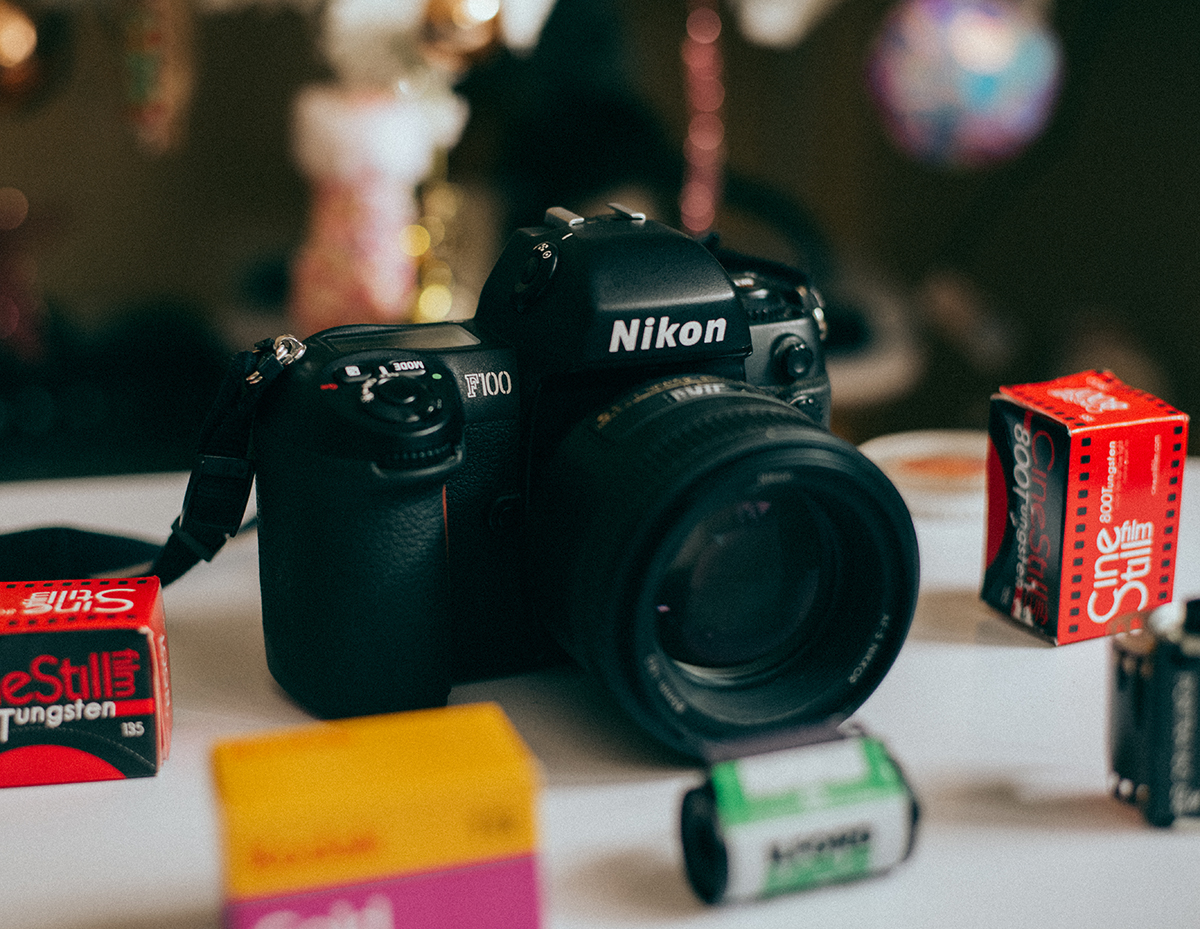
Worth Every Penny or Just Hype? What to Know Before Buying One
This isn’t going to be a regular technical review—you can find those anywhere. This review is meant to help you first determine if the F100 is the right camera for you. If you decide it is, I’ll explain a few things you need to pay attention to, especially since we’re talking about a camera that’s over two decades old.
Is Nikon F100 just a normal followup after previous F-801 and F90x models? Not really. It’s the closest you can get to the F5 flagship model—essentially the same core, refined into a more compact package.
Even though the Nikon F-mount remained largely unchanged for many years, and you can physically mount almost any Nikon lens on almost any Nikon camera, that doesn’t mean it will work properly or let you fully use its capabilities. I won’t cover Pre-AI lenses here, because I don’t think a typical F100 user is interested in that combination. I’ll focus on AI, AF-D, and AF-G lenses instead.
How I Ended Up With the F100
Why the F100? Simple: practicality. I’ve always owned some Nikon film body, usually paired with a 50mm lens. However, for years I’ve also been shooting with Nikon DSLRs for commercial work. That means I already have a full set of Nikon G lenses that are my primary workhorses.
Since Nikon G lenses don’t have an aperture ring (unlike Nikon D lenses), you can’t use them in all modes on most Nikon film cameras. They’ll mount, but you can’t change the aperture in A mode. They usually work in P (Program) mode, but that defeats the purpose of having a true film setup.
I didn’t want to maintain two lens sets—one AF-D and one AF-G—so I decided to go AF-G only. After a bit of research I realized that AF-G lenses fully work only on the Nikon F5, F6, F100, and F80.
The F80 was too small and plastic for me; the F5 and F6 were too expensive and bulky. Since I mostly do street photography, the decision fell on the F100. All modes work, including VR stabilization and auto-focus. Great.
Handling and Controls
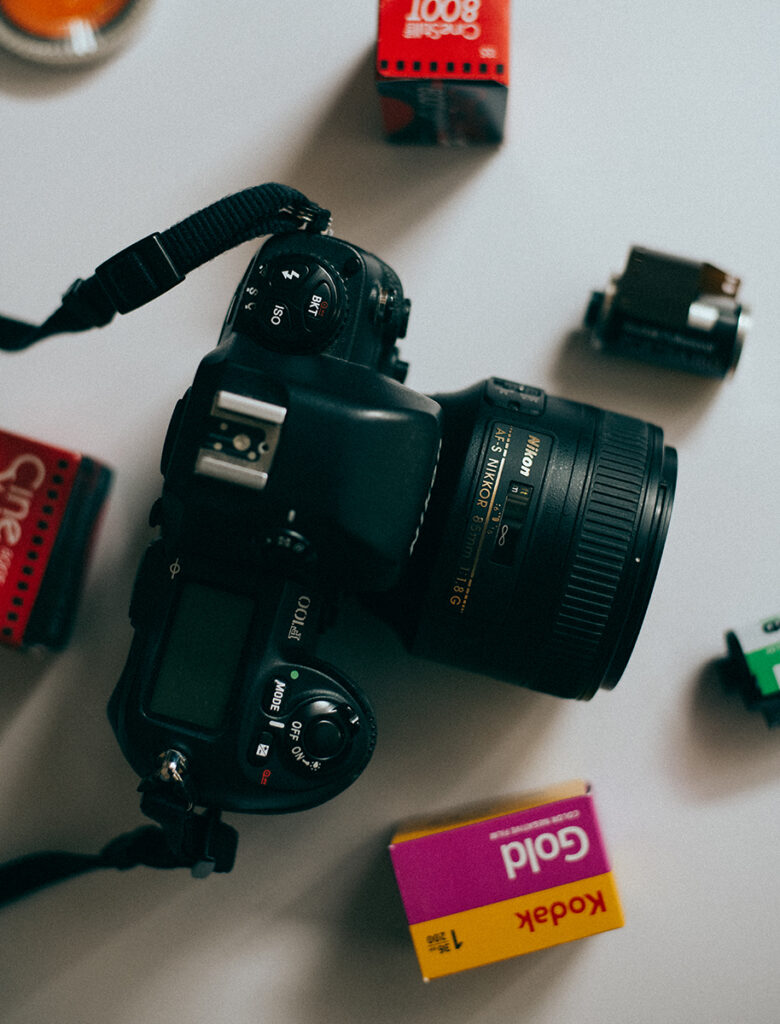
Switching from my D850 to the F100 feels natural in the hand. The D850 is about 100g heavier—not a huge difference. The viewfinder has a diopter correction wheel, which is handy.
Auto-focus is borrowed from the flagship Nikon F5. It has five AF points (three cross-type), which you control with the back button like on any DSLR. On the front, you can switch between Single, Continuous, and Manual Focus, and toggle between Single Point and Dynamic AF. These options may seem limited compared to a modern camera, but trust me—they cover most situations where you’d use a film camera. You’re not going to be shooting wildlife or motorcycle racing with it anyway. I used F90x, F801 and F601 previously and their auto-focus is non-comparable to the F100. It’s nowhere near, especially in dim conditions. Having a larger sized camera such as F100 in your hands is great for stability and you can get good results from hand-held shots even at night, without using tripod.
I tested it extensively for night street photography, and it tracks people without issues, even in poorly lit alleys. It can shoot 4.5 fps—or 5 fps with the optional battery pack—but given today’s film prices, that’s not very relevant. It is worth mentioning that it doesn’t offer AF Fine Tuning (expected for that era), but it didn’t need any for 10+ lenses I tested on it.
Metering is easy to adjust: Matrix, Center-Weighted, and Spot. Other features include self-timer, bracketing, and multi-exposure mode. Exposure compensation is one-button accessible. Overall, the controls feel very “DSLR-like.”
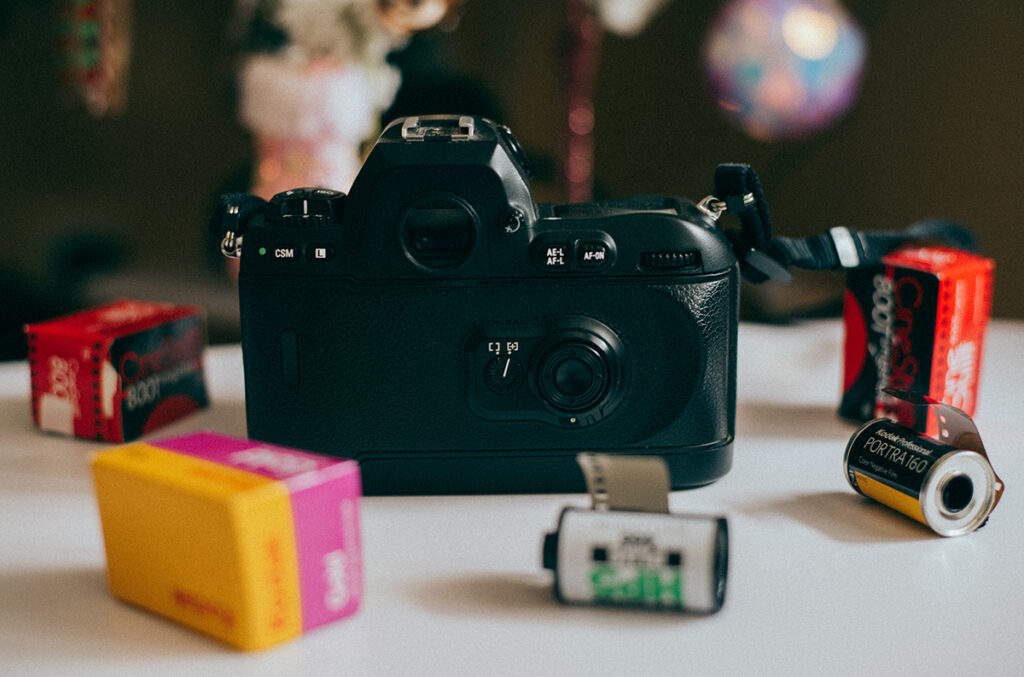
The camera doesn’t have a display for settings, but it offers a CSM (Custom Setting Menu) with 22 programmable values, including useful options like automatic film rewind at the end of a roll, self-timer duration, and reversing the main and sub-dials.
It runs on four AA batteries. Contrary to some opinions, it’s not a power hog. With a good set of lithium batteries, I went through about 20 rolls during very cold days without running out. For that reason, I don’t consider the MB-15 battery pack worth it—the extra size and 0.5 fps gain are negligible in practice.
Potential Drawbacks
The F100 is very well built, with a magnesium alloy body. But when buying used, it’s crucial to check a couple of things. Start with the manufacturing year. The serial number is below the lens mount.
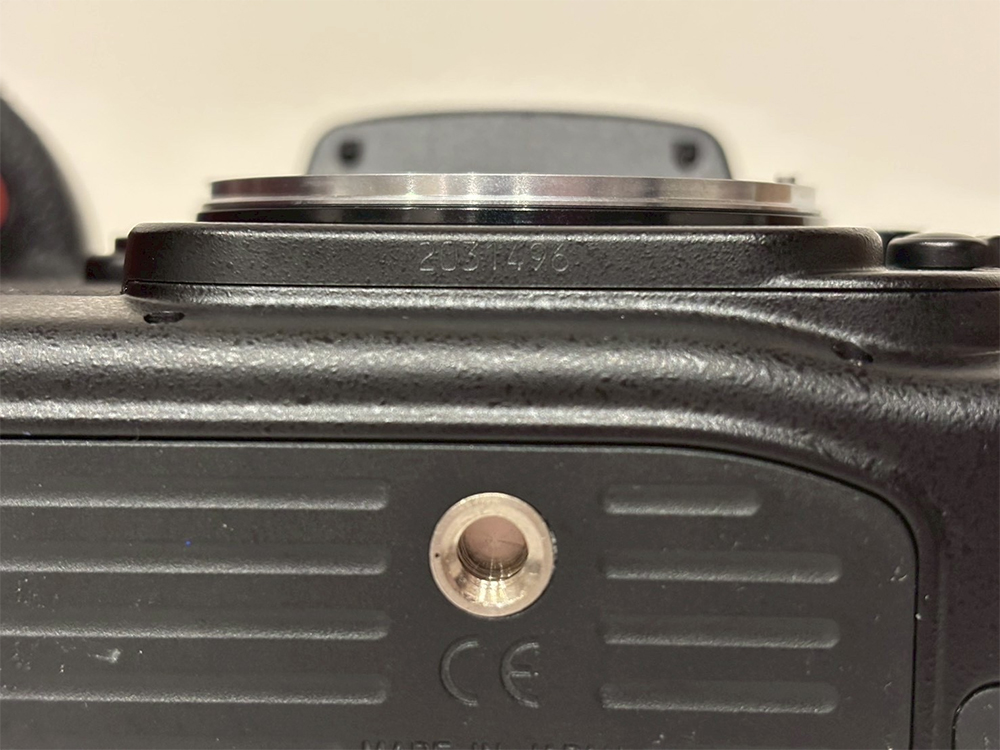
Here’s a rough guide:
- 2010xxx – Early models (~1999)
- 2076xxx – Early 2000
- 2165xxx – Early 2001
- 22534xx – March 2002
- 22750xx – Late 2003
- 2309xxx – May 2004
Compare your camera’s serial number to these dates to see when it was made.
Nikon cut corners on three parts that you need to check before buying: rewind fork, back door latches, and battery tray.
1. Rewind Fork
Older Nikon cameras had metal rewind forks, but the F100 used plastic forks. Early versions were tapered/angled (s/n before ~21654XX) were prone to breaking. Nikon later redesigned it with a stronger squared-tip version. Free retrofits were offered, so don’t be surprised if you find an early s/n camera that has upgraded rewind fork. It was upgraded by Nikon on regular service.
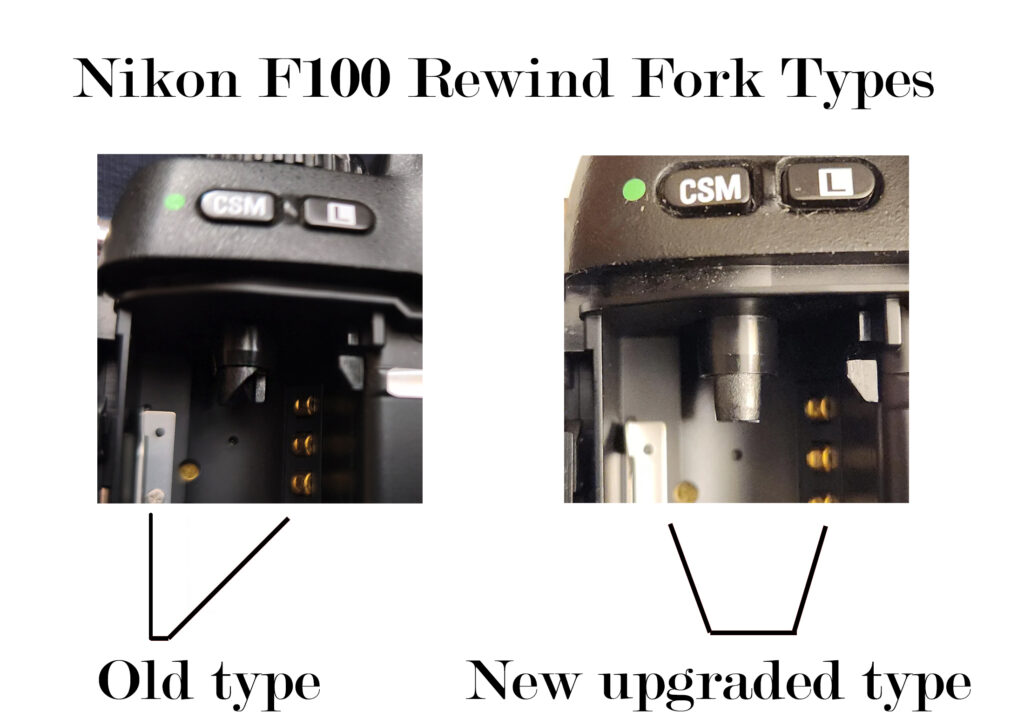
Even if your fork is the older version, it’s not a deal-breaker. Breakage usually happens when the film cassette is forced onto the fork. If the fork is intact, just align and insert the upper part of the film catridge first and handle it gently. You’ll be fine.
2. Back Door Latches
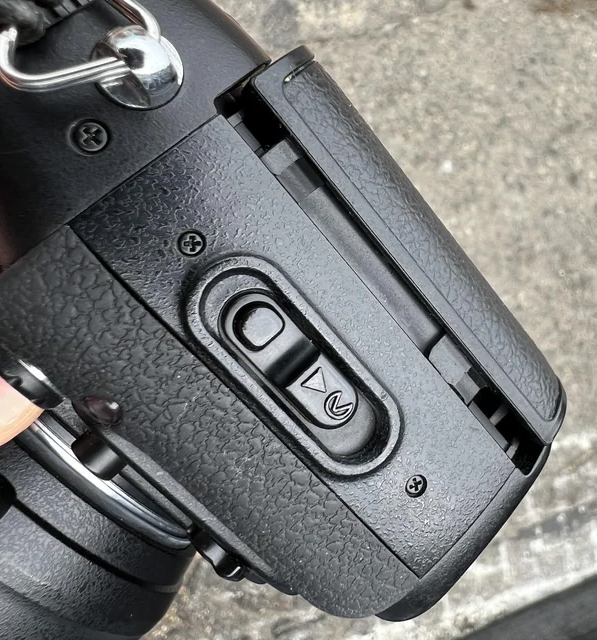
The latches are plastic and can break if handled aggressively. Yes, plastic is not the strongest material, but the main reason why they fail has the same root as rewinding fork: aggressive handling and slamming the doors shut, transferring all the force on those 2 plastic hinges. To avoid this, press and hold the release button while closing the door instead of slamming it shut. If broken, a $20 metal repair kit is available on eBay.
3. Last but not the least – Battery Tray
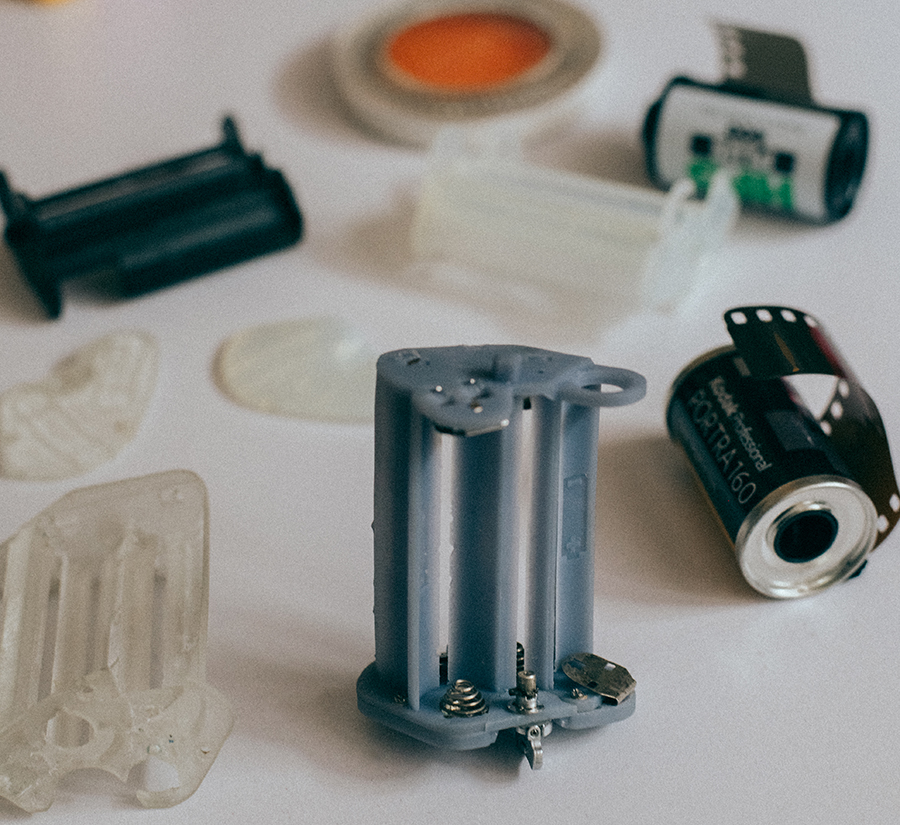
The F100 originally used the MS-12 battery tray for 4x AA batteries, which is a pretty fragile construction. Terminals are thin, and at some point alkaline batteries were forgotten inside. They will leak and destroy the tray over time. That happened on mine. Earlier, that wasn’t a big deal. Nikon was selling new battery trays for 20$ and the problem was solved. But then about a year ago, they were discounted. Trust me I went through all possible online stores, dealership by dealership and they are no longer to be found. Sellers became aware of that and decided to raise the prices of good used ones to the sky limits, and even to remove them from complete cameras and sell separately because of the profit. Since I wasn’t thinking of paying 150-300$ for a battery tray I decided to 3D print one. I had the terminals from the old one. That also turned out to be not that easy because most of the materials I tried were too weak. It is made of 2 components (main battery tray and lower cover). After 4 tries of redefining the 3d model, I finally found a material that works. In case you decide to go that way, let me know and I’ll send you the redesigned model for 3D printing that will work and explain how to do it. I’m not selling that 3d model, you’ll get it for free, you can make a small donation to this website if you feel so.
What if you don’t have terminals so 3D printing is not an option? You can buy Chinese 3d printed MS-13 trays (For 2xCR123a batteries), it comes together with terminals as complete unit. Also let me know if you can’t find it, I’ll help you to order it.
Conclusion
Despite these minor cons, the F100 is an outstanding film camera. It can handle virtually any task, and its cult status is well deserved. If you already have G lenses or just want an extremely capable professional film camera, don’t hesitate, go get one, check the parts mentioned above, and enjoy shooting film with one of Nikon’s best cameras ever made.

If you enjoy the content and find it helpful, please consider making a small donation to support the website’s growth and the creation of new articles.
Sample photos that I’ve made with Nikon F100:

Sigma 35mm f1.4 Art+ Cinestill 800T

Nikon 50mm F1.8G + Kodak Gold 200

Night street photography is piece of cake for F100. Sigma 35mm f1.4 Art + Cinestill 800t – handheld
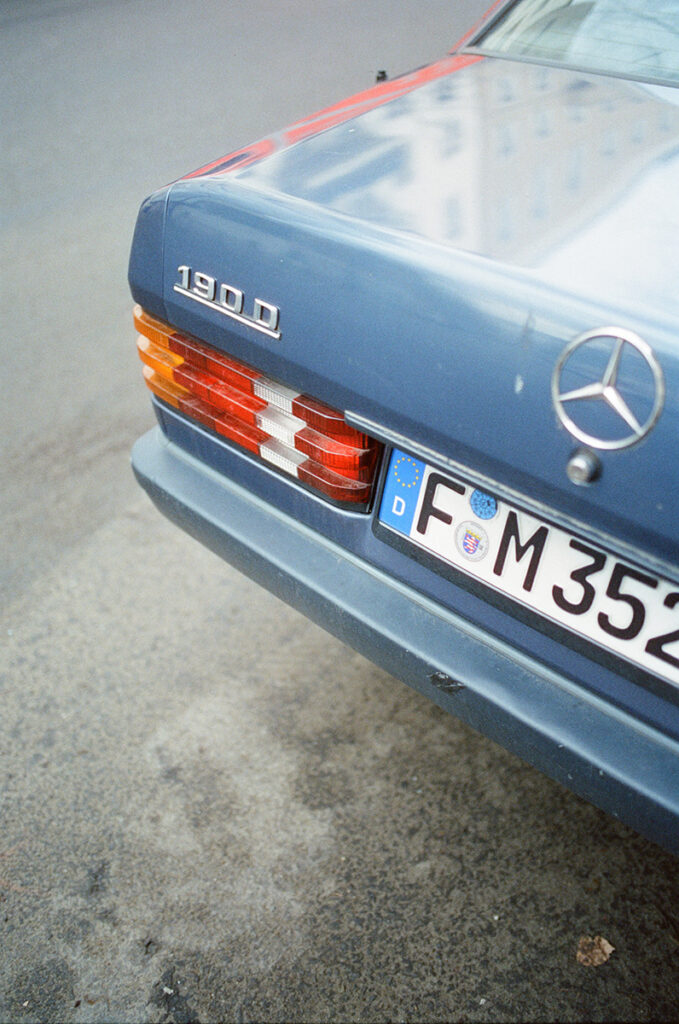
Nikon 50mm f1.8G + Kodak Gold 200

Sigma 35mm f1.4 Art+ Cinestill 800T

Nikon 50mm f1.8G + Kodak Gold 200

Nikon 50mm f1.8G + Kodak Gold 200

Sigma 35mm f1.4 Art+ Kodak Gold 200
If you enjoy the content and find it helpful, please consider making a small donation to support the website’s growth and the creation of new articles.



Leave a Reply