
Long time favorite of Photojournalists and Press photographers. What makes it so unique?
Ilford launched HP5 in 1976. Plus version came in 1989.
HP stands for Hypersensitive Panchromatic. HP line of films is stretching all the way up to the 1930’s. Original one was 160 asa which was an insane speed for the period. From the early days it’s main competitor was Kodak’s Tri-X series.
Tri-X is like a Harvard graduate. Precise, competent, skilled, smart but in some cases boring.
HP5 is not the finest grained film. It’s not the sharpest. It’s not even shining at box speed. But it has character. If Tri-X series is perfect for studios and fine-art photography I would say that HP5 is the master of street photography and life photography in general. You can get it in both 35mm and 120 format these days.
Even though the current version (1989+) HP5 Plus on the specs looks quite dull, “iso 400 b&w film”, we would think that it’s pretty much the same as Tri-X, but in practice they are very different.
Characteristics
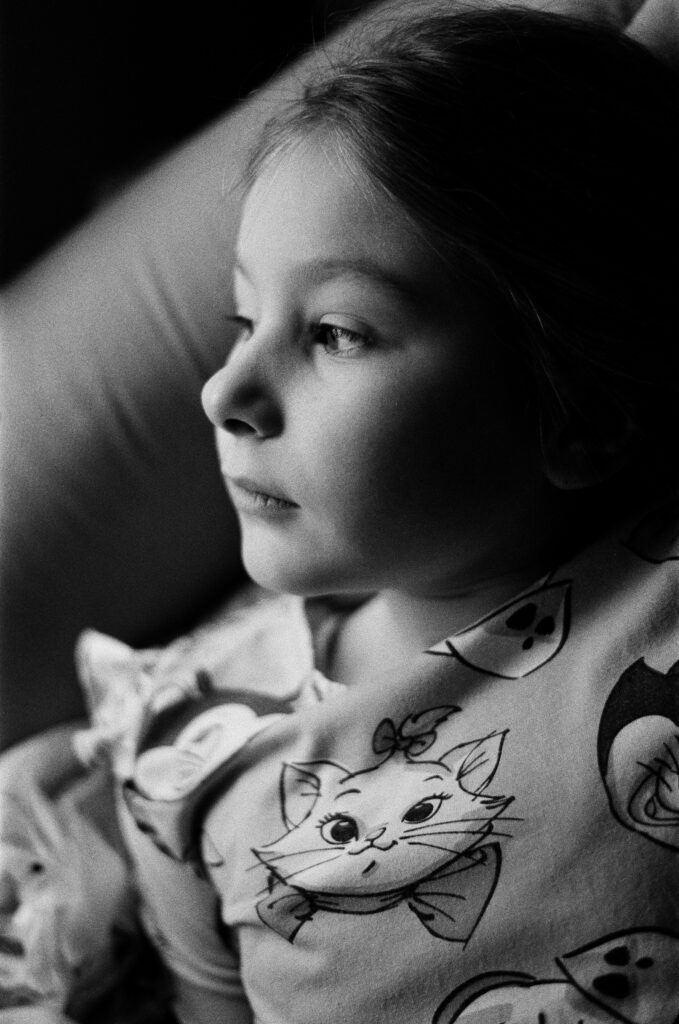
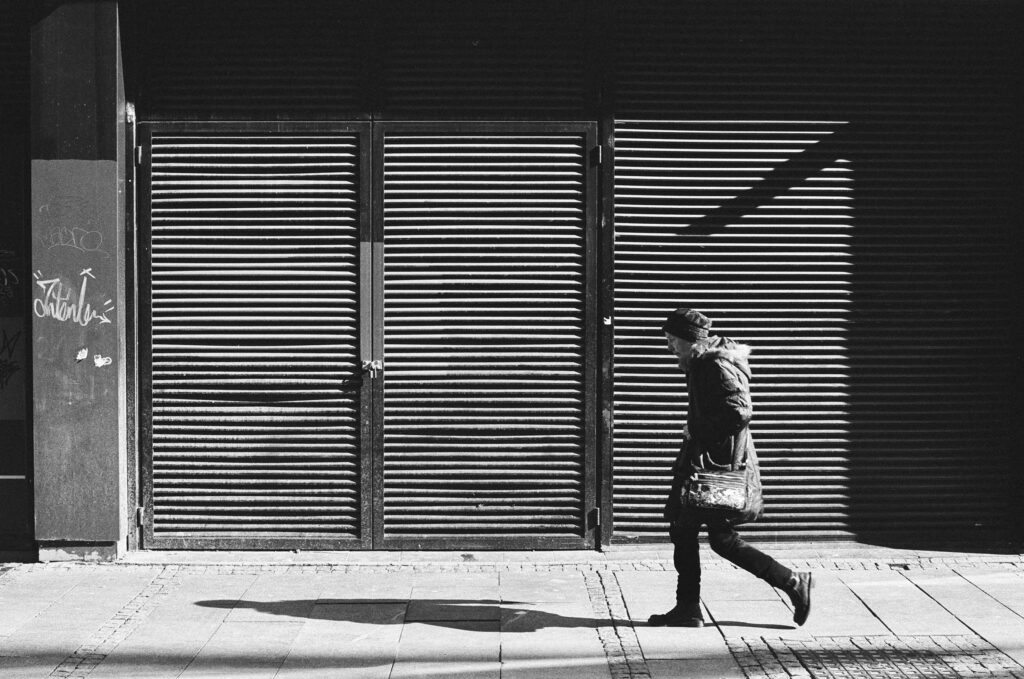
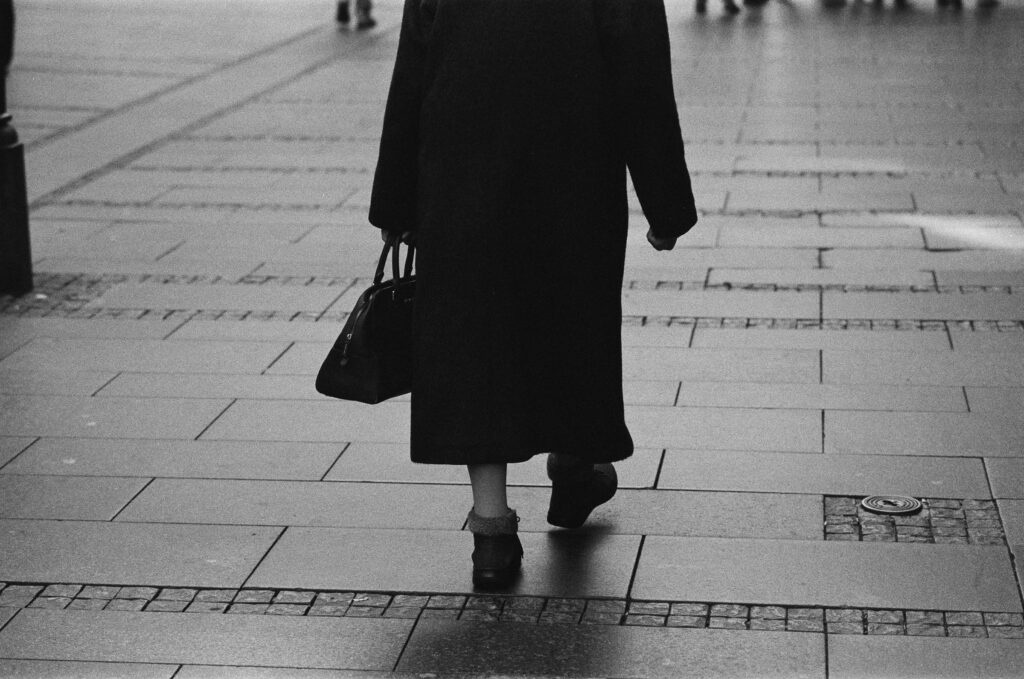
It appears very quickly that it renders shadows differently. First of it, it renders less shadow details. But before you say that’s a bad thing, I must add that it seems to be one of its main advantages. Photographs made with it, makes you have a feeling that whole image is constructed from the grounds of those shadows instead of other way round. That makes subject “pop” effect.
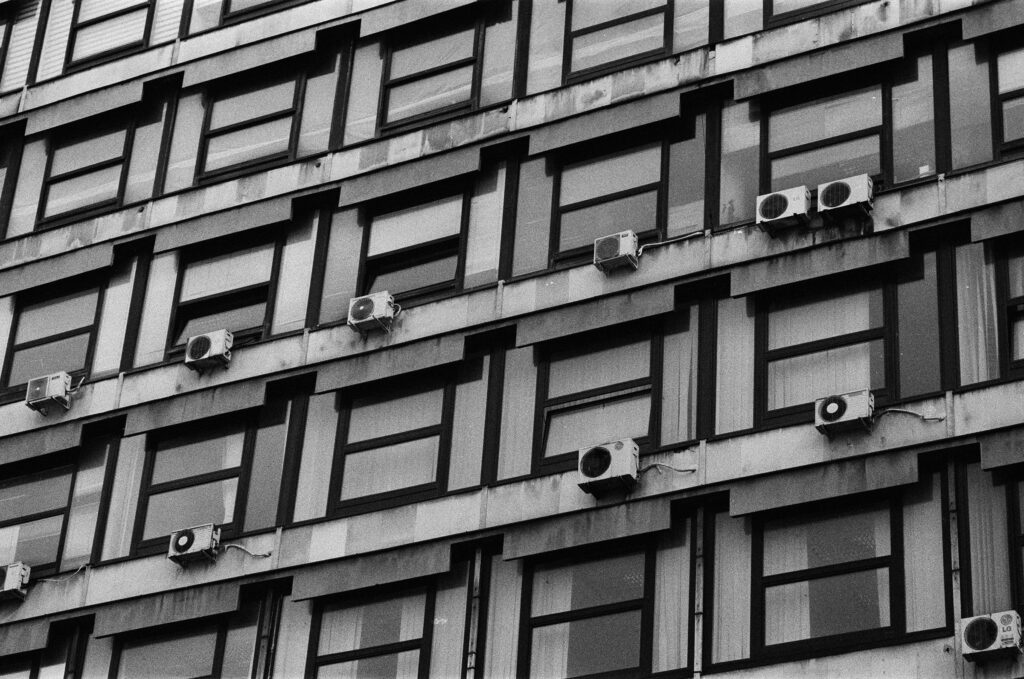
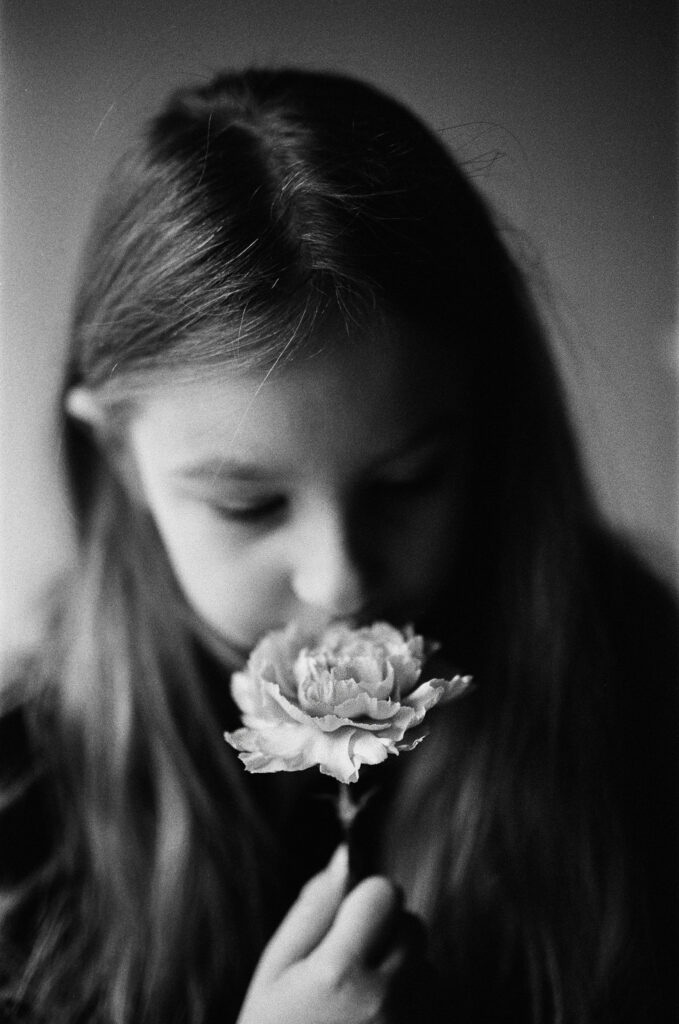
Grain of Ilford HP5 Is always noticeable but not distracting.
Another good thing is that when dry, Ilford HP5 is completely flat. It is a bliss for both scanners and enlargers.
Pushing
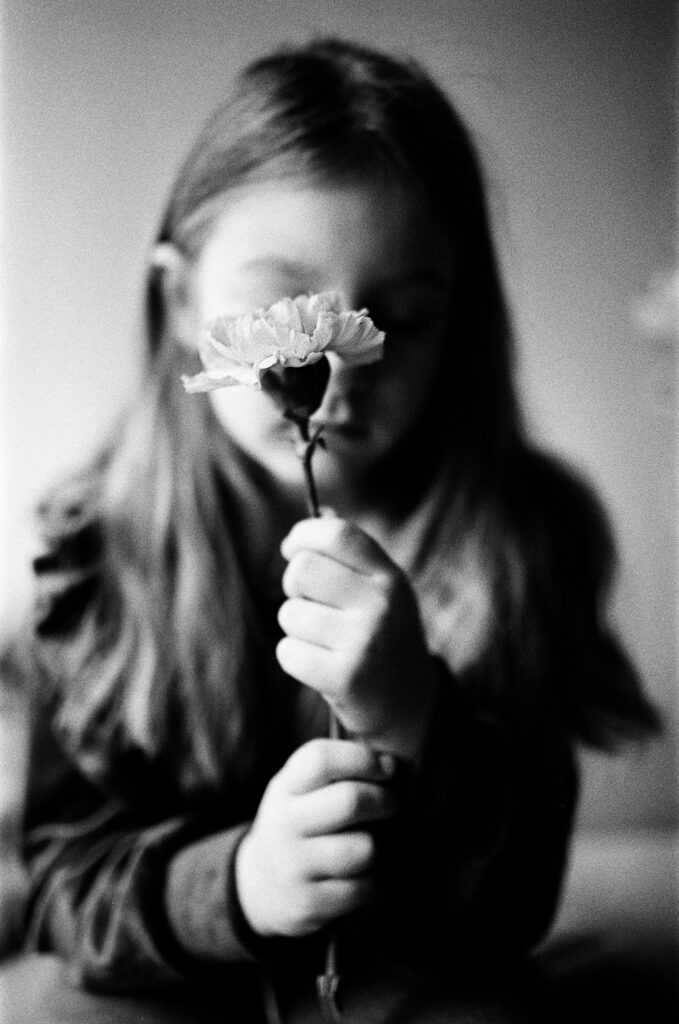
Oh man, can HP5 be pushed. In both ways. It’s remarkably tolerant of exposure errors (and not so “errors”). Something like Kodak Portra in color film world. This was the main goal for me. Having a high iso film is good, but if you are not blasting through the rolls (not many of us are with these film prices nowadays), you will end up stretching one roll of film through both daylight and low-light scenes. That is the main reason why I love this film. You can shoot it as iso 200, and iso800 on the same roll, with the same default developing times. It is not ideal of course but you will get the shots. It takes a lot to blow the highlights and destroy the shadows.
When shot and developed at box speed, it is a bit flat for my taste. I prefer to shoot it @800 (1 stop pushed). That gets me in the perfect zone where contrast is more pronounced and shadows are punchy.
These are the basic guidelines for developing:
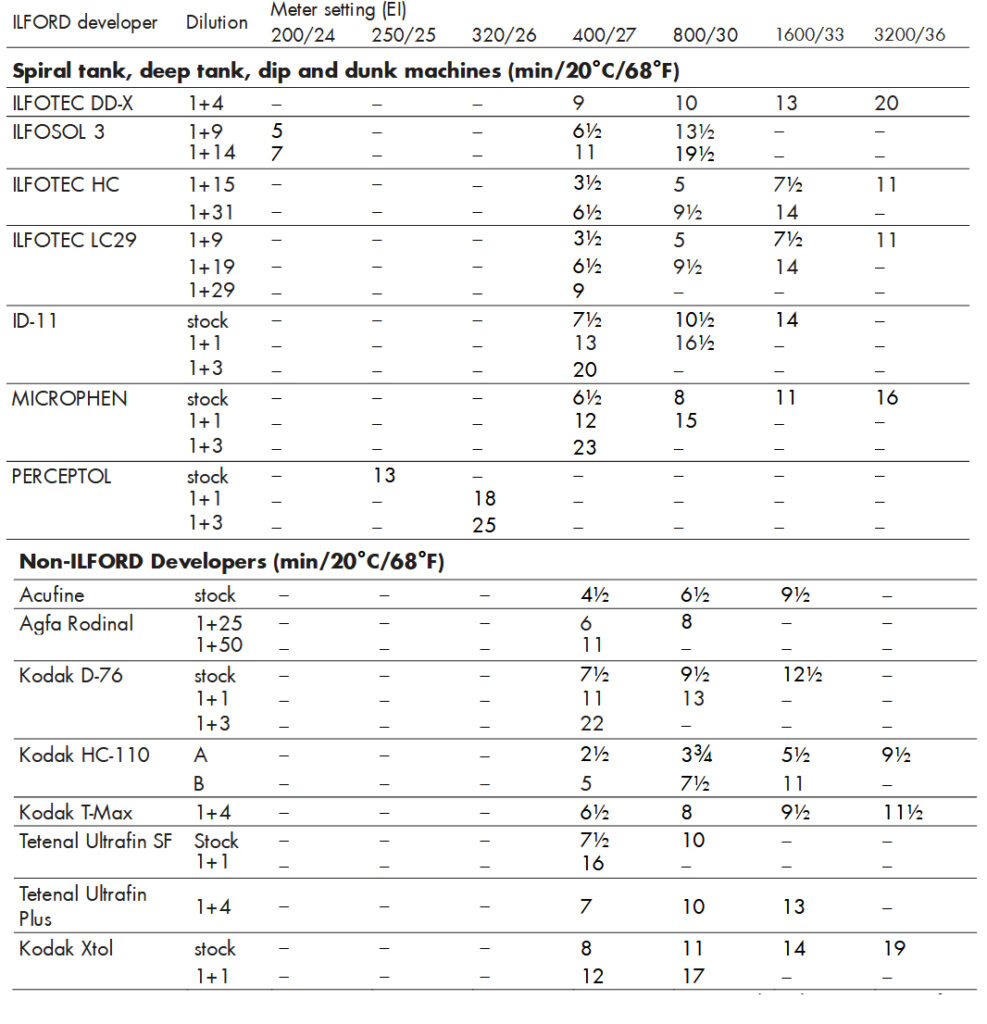
You can go with 3200 no problem. Contrast goes up, grain also but the tonality is not destroyed.
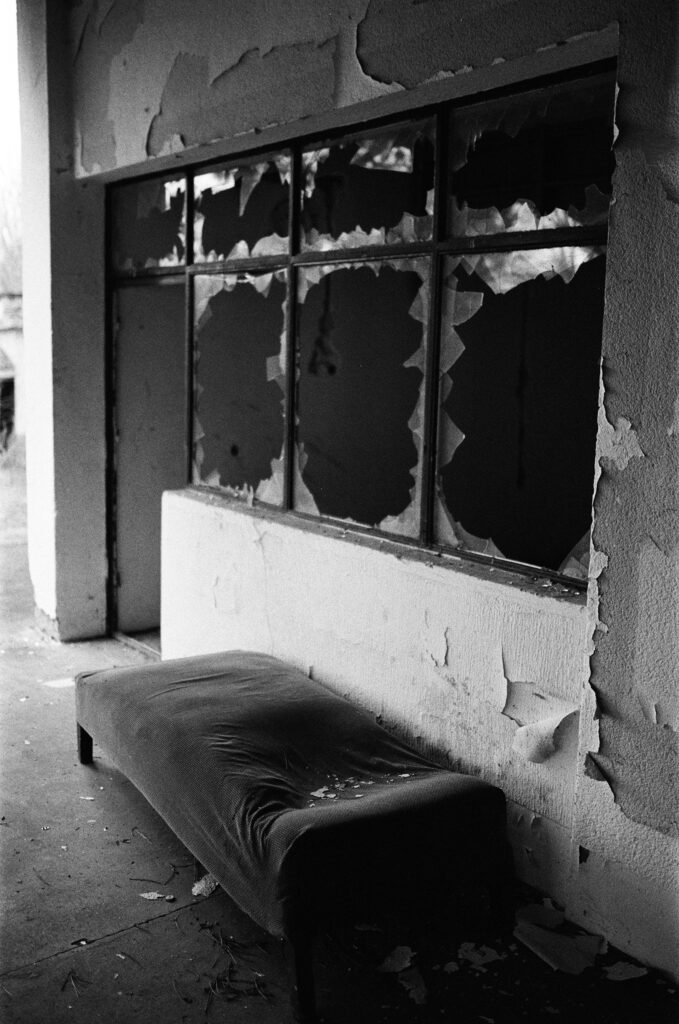
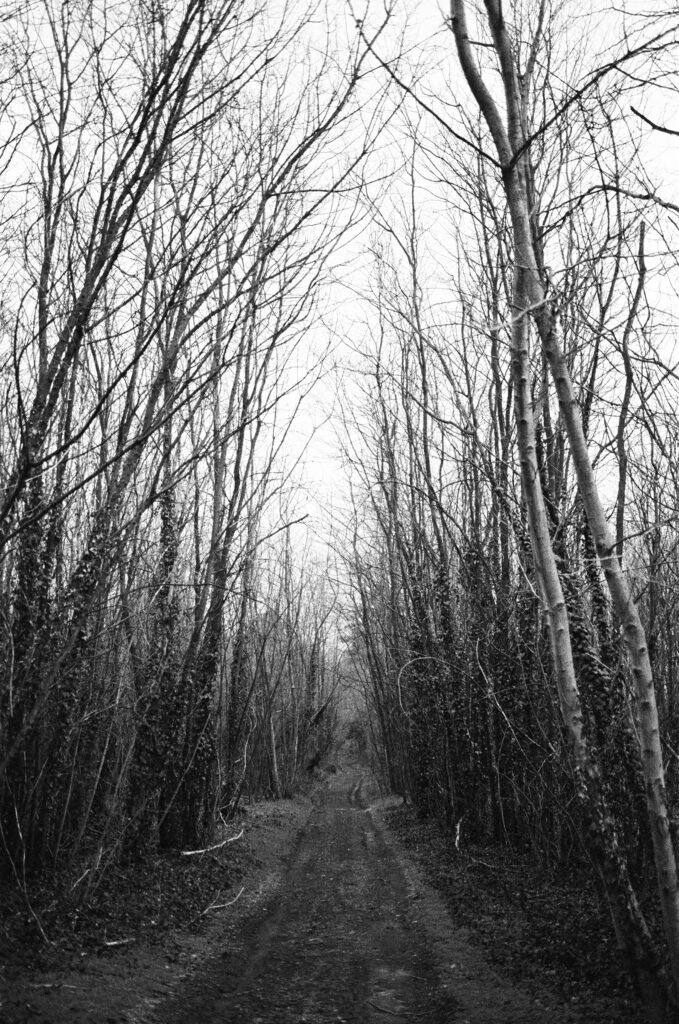
Long Exposures with HP5 and Reciprocity corrections.
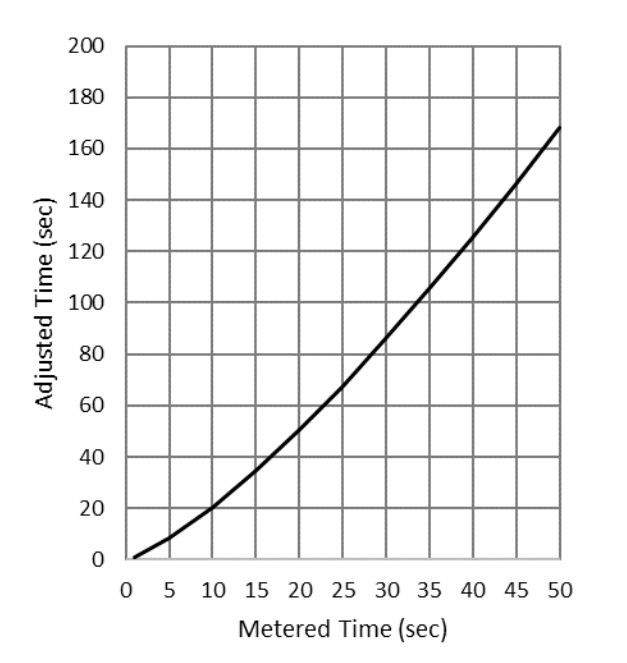
As you probably know for long exposures on film you need to give it more exposure time than indicated by a light meter.This film is very good in this area. Even though Ilford states that exposures between ½ and 1/10.000 of a second require no adjustments, I’d say that anything up to 5 seconds – don’t bother.
For shots outside of that range you can follow the chart below:
Summary
So is it the best black and white film there? If it’s versatile, usable from iso 200 to 3200, if it has “3d pop” effect, easy to develop and scan, what can be it’s flaw?
Only one thing, sometimes it’s character. In case you are a fine-art photographer, landscape photographer, or studio portrait photographer, there is a chance you’ll want something with finer details and smoother tonality. High contrast and rendition is killing definitely some of those fine gradients and some pixel peepers will want that.
All-in-all, are there faster films? Yes. Are there technically better films? Yes. But do they capture the atmosphere like HP5? No. That’s the reason why I love it and return to it.
If you enjoy the content and find it helpful, please consider making a small donation to support the website’s growth and the creation of new articles.

Leave a Reply